
Where I’m from in West Yorkshire, “not bad” is high praise. Say “that’s not bad” about someone’s cooking and you’ve made their day. Say it to a colleague in Amsterdam and you may have just told them their work is mediocre.
This is the evaluating scale in Erin Meyer’s The Culture Map, and it covers how we deliver negative feedback. Dutch culture sits at the direct end: criticism is honest, blunt and unsoftened, and it is considered rude not to be clear. British culture leans the other way, wrapping criticism in understatement and qualifiers. The Dutch engineer who says “this isn’t good” is being helpful. The British manager who says “this is quite interesting” is being kind. Each reads the other as unhelpful or unkind.
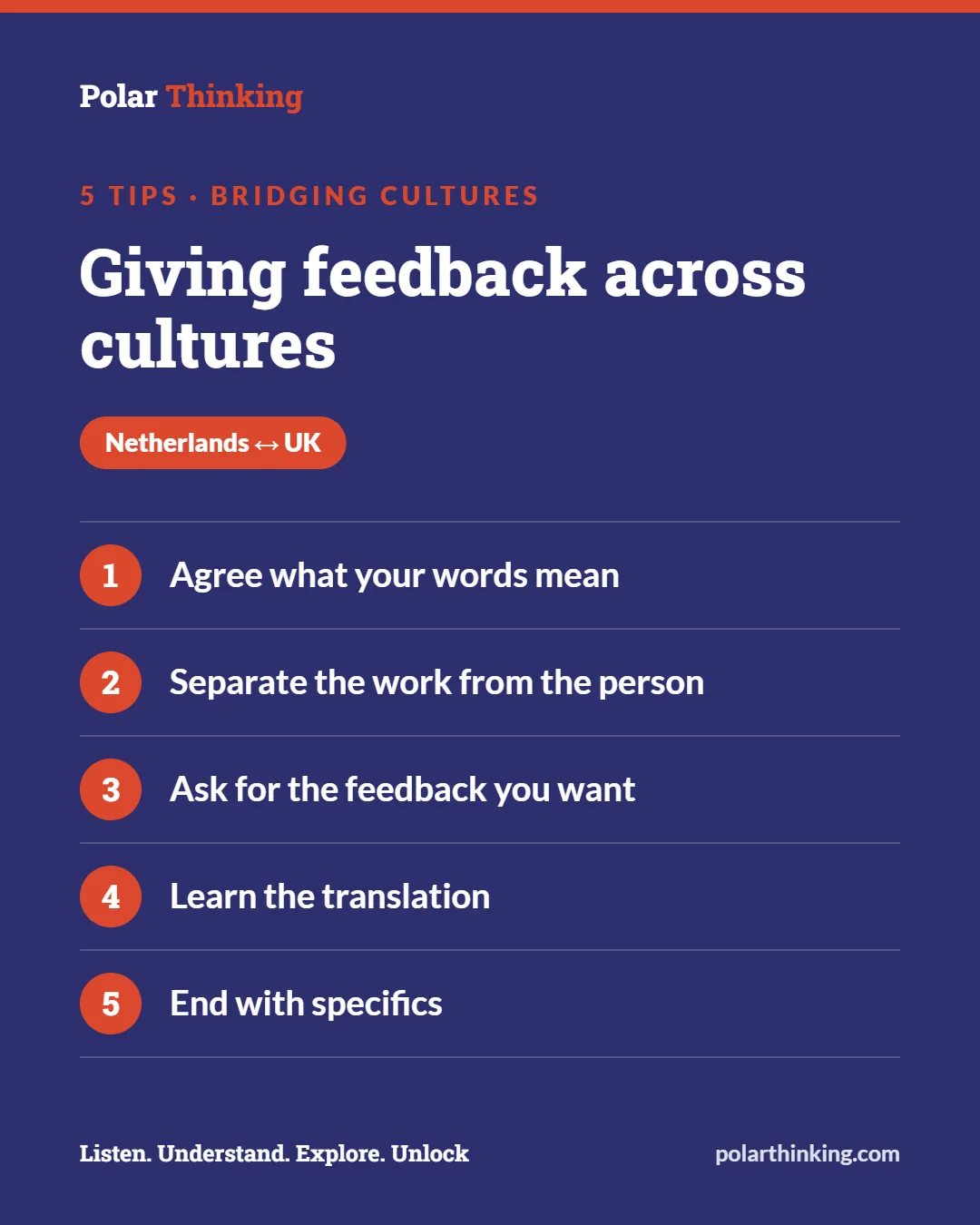
1. Agree what your words mean
On day one of a project, spend two minutes calibrating. “When I say ‘good’, I mean it meets the brief. When I say ‘excellent’, it’s exceptional.” It feels clumsy once and saves a great deal of confusion thereafter.
2. Separate the work from the person
If you receive direct feedback, remind yourself that it is aimed at the document, not at you. If you give it, say so out loud: “I’m being direct because I want this to succeed.”
3. Ask for the feedback you want
Everyone can say, “I’d value your honest view, and bluntness is fine with me” or, “Could you take me through it gently?” Making the request explicit gives your colleague permission to flex.
4. Learn the translation
In British English, “with the greatest respect” often means “I disagree”, “I’ll bear it in mind” can mean “no”, and “that’s a brave idea” is a warning. A short shared glossary on the team wiki is a brilliant icebreaker, and a surprisingly effective one.
5. End with specifics
Adjectives are cultural. Facts are not. Close every piece of feedback with what needs to change, by when, and what a good version looks like. It works for the blunt and the diplomatic alike.
One caveat
The Dutch can be tactful and the British can be brutal, and age, sector and personality count for a lot. Treat the scale as a starting question, “how do you like to hear this?”, rather than a prediction.
Which end of the scale are you, and who in your team sits at the other?
If feedback is getting lost in translation across your teams, Polar Thinking’s Bridging Cultures programmes can help you build shared habits through personalised analysis, coaching and experiential workshops. Book a chat with Graham to talk through what you or your team need, with no obligation.